
12th Jan, 2026
Why Maresca, Amorim and the Modern CRO share the same precarious seat
Written By:
Tiller Team
Idea & Editor: Alastair Doig
Data provided by: Gemini
In the cold, clinical world of the Premier League, there is a specific type of silence that follows a sacking. It is the silence of a boardroom that has decided it is cheaper to sever a head than to fix a body.
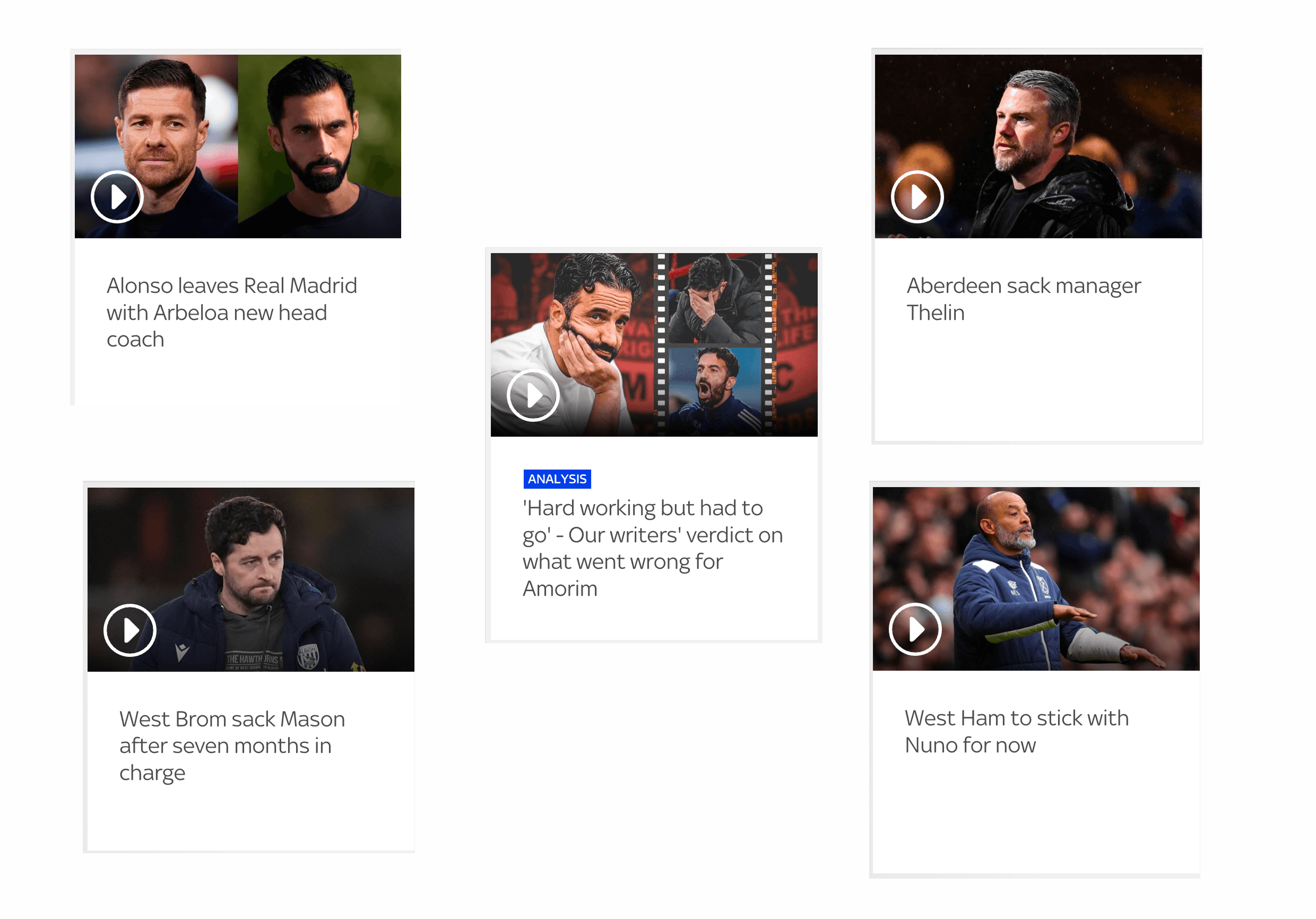
This year already, Enzo Maresca and Ruben Amorim have been fired (with much better golden exits than the average CRO). They arrived with projects, philosophies, and long term visions, only to find that in the modern era, long term is a luxury afforded only to those who never lose three games in a row.
But if you are sitting in a glass walled office in London, staring at a Salesforce dashboard rather than a tactical whiteboard, do not look away. The Premier League manager and the Chief Revenue Officer (CRO) are no longer just comparable roles. They are effectively the same role. They are the twin occupants of the Point of Maximum Accountability.
The Brutal Maths of Survival: Less than 24 months for both
In both the technical area and the C suite, the margin for error has not just shrunk; it has vanished. Current data suggests the average tenure of a Sales Leader now mirrors the volatile lifespan of a top flight manager. You have roughly 18 to 24 months of runway before the ejector seat is primed.
Metric | Premier League Manager | London Tech CRO |
Average Tenure | ~19 to 24 Months | ~18 to 22 Months |
Sackable Offence | 5 to 8 matches without a win | 2 consecutive quarters of missing quota |
The Transfer Window | January and Summer | Annual Budget / Fiscal Q1 |
The Board | Owners and Global Fanbase | VCs / Private Equity / CEO |
The Easy Button Philosophy
Why are these the first heads to roll? Because in both football and SaaS, the CRO and the Manager represent the ultimate lightning rod.
If a CFO misses a forecast, it is often framed as a process error. If a Product team misses a launch date, it is viewed as development friction. But for the Manager and the CRO, performance is binary. You either hit the number (three points or a seven figure target) or you do not.
For a Board of Directors or a group of Venture Capitalists, firing a leader is the Easy Button. It is a performative act of decisiveness. It signals to shareholders and fans that something is being done, even if the underlying product is flawed or the market pitch is a quagmire.
The Lone Wolf and the Star Striker
The parallels extend deep into the dressing room. A Premier League manager must navigate the ego of a star striker who scores 25 goals but poisons the culture. Similarly, a CRO is frequently held hostage by the Lone Wolf Account Executive, the one who hits 150% of their quota but refuses to use the CRM and treats the rest of the team with disdain.
Both leaders face the same Buy vs Build dilemma. Do you spend your limited capital on a proven veteran (the expensive external hire) or invest in the youth academy (the SDR to AE pipeline)? A bad signing in either world is a multi million pound mistake that can set a squad back three years.
The Amorim Trap: When the System Becomes a Straitjacket
The recent departure of Ruben Amorim offers a sobering lesson in systemic rigidity. Amorim arrived with a glowing reputation built on a very specific tactical setup, his trademark 3 4 3 formation. It was the system that made him a champion in Portugal. But when he tried to overlay that exact playbook onto a squad built for a different style of play, the friction was instant.
Amorim prioritised the geometry of the system over the capability of the players. He asked sprinters to be marathon runners and defenders to be playmakers, assuming the system would compensate for the lack of fit.
CROs fall into this trap when they arrive at a Series B startup and try to run the Salesforce Playbook on a garage budget. If your proven methodology requires your team to be something they are not, or ignores the current reality of your market, you will not last the season.
From Survival to Sustainability: How to Build a Revenue Dynasty
If the Sack Race is the default setting, how does a CRO achieve the rare air of a dynasty? To survive, you must stop acting like a Matchday Manager and start acting like a Chief Architect.
1. Build a Tactical Philosophy, Not Just a Squad
Modern managers like Mikel Arteta do not just buy players; they buy profiles that fit a repeatable system. The system is the star, not the individual. If your revenue depends on two rockstar reps, you are not a leader; you are a passenger. You are one resignation away from a crisis.
The System Builder Move: Invest in a rigid Sales Playbook and Enablement engine. Build a machine where the process is so well defined that a new hire can be transitioned to output in half the time. Your goal is a system where average reps become high performers because the environment makes it impossible to fail.
2. Master the Continuous Evolution Cycle
Pep Guardiola is the master of this. He famously changes his tactical shape every season to stay one step ahead of the competition. Success often breeds a dangerous business as usual mindset. The tactics that scaled you to £10M ARR will almost certainly fail at £50M.
The System Builder Move: Every 18 months, perform a Tactical Audit. Challenge your Ideal Customer Profile and your tech stack as if you were a new hire trying to disrupt the company. If you are not disrupting your own sales process, the market (or your successor) will do it for you.
3. Lead via High Level Observation
The Elite Manager is no longer just a coach; they are a Director of Performance. They delegate technical drills so they can focus on the Macro signals. High churn CROs are often Player Coaches who jump into every closing call and micromanage the CRM. This is a fast track to burnout.
The System Builder Move: Trust your managers to manage. Move your focus from the CRM data (the past) to the atmospheric data (the future). Your job is to spot the cultural dip, the shift in competitor pricing, or the decline in lead quality before it hits the scoreboard.
4. Audit for Squad Fit Before Deploying the Playbook
Before you install your world class sales process, you must audit the players you have inherited. If you want to play a high pressing game but your defenders are slow, you must adapt or you will be fired before the next transfer window.
The System Builder Move: Do not be a System Zealot. Ensure your sales methodology is a tool for the team, not a hurdle they have to jump over. If your team are Transactional Order Takers, you must coach the shift or bridge the gap with bridge tactics while you transition the talent.
The Final Word
The lesson from the recent sackings of Maresca and Amorim is clear. In the Point of Maximum Accountability, you are either building a system that can outlast you, or you are simply keeping the seat warm for the next person.
How to Audit your Closing System
Use the framework below to stress test your foundations and build a machine that delivers elite performance regardless of market conditions.
Focus Area | Quick Audit (Level 1) | Deeper Dive (Level 2) | Deeper Dive (Level 3) |
1. The Operating System | If you audited five random opportunities, would the stages and exit criteria be identical across all five? | What three non-negotiable "High Value Activities" lead to a win, and how is their completion verified? | How do you identify "System Drift" (deviating from the playbook) before it impacts the quarterly target? |
2. Market & ICP Alignment | What is the biggest trend or reason for "Closed Lost" deals in the last six months, and do you have a counter-tactic? | Which customer segment has shown the shortest sales velocity in the last 90 days? Have you doubled down there? | If you increased pricing by 20% tomorrow, which 10% of your current pipeline would still close, and why? |
3. Pipeline Integrity | Beyond the CRM stage, what three objective "Proof Points" (e.g. Mutual Action Plan) are required for a "Commit" forecast? | What is your current "Pipeline Coverage Ratio," and is it mathematically sufficient to hit the target without "Bluebird" deals? | How do you measure "Deal Decay"? At what point does a lead become "stale" and get removed from the active forecast? |
4. Systematic Coaching | Are your 1:1 sessions predominantly spent reviewing CRM updates (past), or on tactical roleplay and skill building (future)? | What is the "Gold Standard" for a discovery call, and does every manager use a shared scorecard to measure reps? | How are you capturing the "Best Practices" of your top 10% to raise the floor of your "Middle 60%"? |
5. Stakeholder Transparency | What is the one "Leading Indicator" (e.g. new qualified pipeline) that accurately predicts revenue six months from now? | Does your Board agree on the "Unit Economics" (CAC, LTV, Payback), or is there a misalignment on what success looks like? | If revenue stopped today, how many months of "Vested Pipeline" do you have that could still close based on momentum? |
From the Tiller Blog:
How to Set Up Recording Intelligence Templates
Build your own Recording Intelligence template in a few minutes. Choose what gets analysed, what gets tracked, and how the feedback is written for every call and meeting.
7 Oct 2026

User Roles
Tiller's New Role-Based Privacy Controls Explained
1 Oct 26

Tiller desktop app isn't recording on macOS
Tiller not recording meetings on your Mac? It's usually a missing macOS permission. Here's how to turn on Accessibility, Screen & System Audio Recording and Microphone access so you're recording again in a couple of minutes.
23 September 2026